Standards & municipalities
Less daylight because of your neighbours? What the court weighs
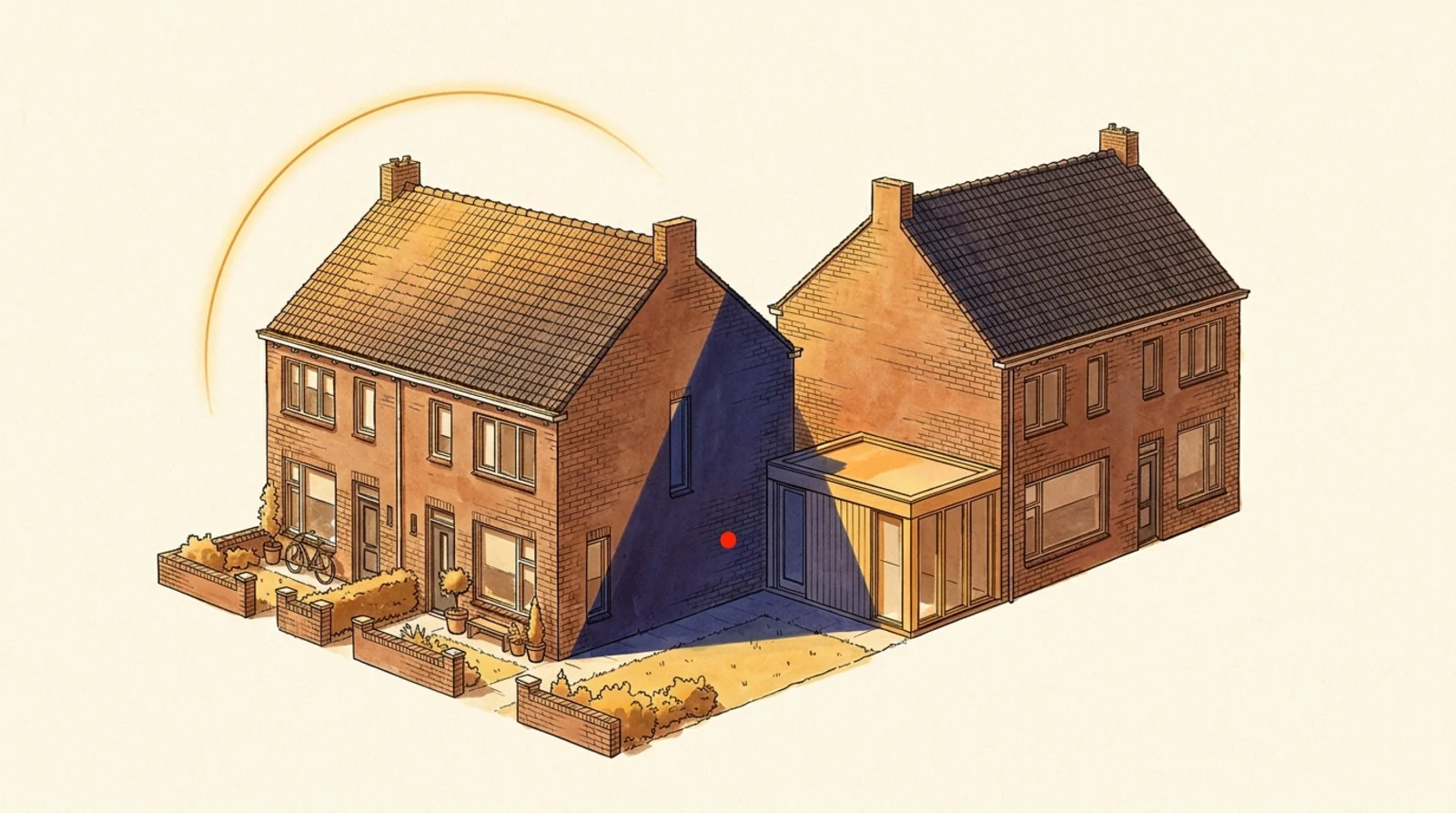
Losing daylight to a neighbour's extension or roof addition? Article 5:37 of the Dutch Civil Code protects light, not just direct sun. Courts have had the daylight factor calculated per room and ordered construction halted in 2024 and 2025. Daylight is the second leg alongside sunlight access; together they carry the most weight.
Does less daylight from your neighbours count legally?
Less daylight caused by a neighbour’s extension, addition or roof addition can count legally. Article 5:37 of Book 5 of the Civil Code (BW) prohibits the unlawful “withholding of light or air” from another property, and light there is broader than just direct sun. Judges have weighed daylight loss as a separate, accepted yardstick and in 2024 and 2025 even imposed construction stops. There is no hard threshold percentage for daylight; the court weighs the nature, severity and duration.
That matters, because sunlight (sun hours) and daylight (sky light) are often lumped together. For an objection or a neighbour-law case it pays to separate them: the sunlight standard is the familiar route, but daylight loss is a second leg that judges, going by recent rulings, look at more and more often. This guide explains how it works and how to substantiate it.
Sun and daylight: two different things
Sunlight is the number of hours of direct sun on a point, tested against the TNO standard. Daylight is something else: the amount of sky light a window receives, even on a cloudy day and even without the sun shining directly. A wall or addition right in front of a window can barely touch the sun hours yet remove a large part of the sky. That is exactly the situation the sunlight standard misses: the sun largely remains, but the sky disappears behind the new wall.
The two measures each have their own place in the law. The table below sets them side by side, including what Schaduwplan shows for each.
| Aspect | Sunlight (sun) | Daylight (sky light) |
|---|---|---|
| What it measures | Hours of direct sun on a measurement point | Amount of sky light a window sees or lets in |
| Assessment framework | TNO standard (guideline) and municipal standards | Bbl daylight requirement (NEN 2057) and NEN-EN 17037 (guideline) |
| Legal hook | Good spatial planning; art. 5:37 BW | Art. 5:37 BW (“withholding of light”) |
| How the court weighs it | Often the main anchor, with figures per test date | Second leg; strong in combination with sunlight |
| What Schaduwplan shows | Sun hours and sun loss per test date | Sky-view indication (VSC) per window — outside face |
How does the court measure daylight loss?
First, the crucial distinction. In such cases the court has an expert calculate the indoor daylight factor (DF): how much daylight reaches a working plane inside the room, in line with NEN-EN 17037 or the equivalent daylight area of NEN 2057. That is a different, more complete figure than a sky-view indication. A sky-view or Vertical Sky Component measures, on the outside of the window, how much sky it still sees. The sky-view is a handy, conservative first indication; it does not replace the expert calculation.
With that distinction in hand: judges have in fact let the indoor daylight factor weigh in. On 18 October 2023 the District Court of Limburg (ECLI:NL:RBLIM:2023:6456) had an expert calculate the average daylight factor per room and called both sunlight and that daylight factor “generally accepted methods” for assessing the deprivation of light. The court established unlawful nuisance on the basis of both the reduction in sunlight and the drop in the daylight factor.
This does not stand alone. On 2 June 2025 the District Court of Northern Netherlands (ECLI:NL:RBNNE:2025:2378) imposed a construction stop in summary proceedings because the daylight access after an extension would drop below the recommended value of NEN-EN 17037; the court considered that standard usable, even though it is not yet incorporated into legislation. And on 26 July 2024 the District Court of The Hague (ECLI:NL:RBDHA:2024:11706) imposed a construction stop where the expert report showed a drop in the daylight factor of around 19%, alongside substantial sunlight loss.
Sun often remains the main anchor
Daylight is the second leg, not a replacement. The best-known anchor remains sunlight. On 17 January 2024 the District Court of The Hague (ECLI:NL:RBDHA:2024:1206) ordered the demolition of a roof addition at 75 to 80% sunlight loss, even with an irrevocable permit. Reduced daylight access was mentioned there, but the decisive figure was the sunlight loss.
The practical lesson: you are strongest with sunlight and daylight together. A substantial sun loss makes the case; a demonstrable daylight loss strengthens it — certainly at a north-facing or side facade where the sun hours are already limited and the blocking of the sky is the real problem. A single piece of evidence that shows both is more convincing than a complaint based on gut feeling. Judges regularly dismiss claims that lack measurable substantiation.
What can you do about daylight loss caused by the neighbours?
Two routes are open, and they do not exclude each other. Which one you choose depends on the phase the construction is in and on your goal.
- With the municipality: a formal view or objection. As long as the environmental permit is not yet irrevocable, you file a formal view (zienswijze, during the public-inspection period) or an objection (bezwaar, within six weeks of publication). Substantiate it with figures on sun and daylight loss; a municipality takes a number more seriously than a feeling.
- Civil law: holding the neighbours liable. Even after the construction is completed, you can hold the neighbours liable before the civil court for unlawful nuisance (art. 5:37 in conjunction with art. 6:162 BW). The court can order modification, a construction stop or even demolition, and a permit offers no protection against that. The limitation period for nuisance is five years.
For both routes the substantiation is the same: a methodical report that shows, per measurement point, how much sun and sky light is lost, based on sources the court recognises. How the neighbour-law route works exactly is set out in a neighbour’s roof addition: when is shadow legally unlawful? The broader explanation of the rules is in sunlight, daylight and neighbour law: which rules apply?
How Schaduwplan supports this
Schaduwplan computes both legs. Enter the address of the planned or existing construction, draw the extension or roof addition based on the building drawings or as an existing 3DBAG volume, and place measurement points at your windows. Per test date you get the sun loss as a percentage, before and after the construction — exactly the type of figure the District Court of The Hague called decisive in January 2024.
The tool also shows, per window, a sky-view indication (Vertical Sky Component): how much sky the window still sees from the outside, before and after the construction. That is an additional, conservative measure of daylight loss — the second leg alongside sunlight. It is explicitly not the statutory daylight requirement from the Bbl, and not the indoor daylight factor that a court has an expert calculate; for that building-physics calculation a building-advisory firm remains the appropriate route. For the first, substantiated picture of what you stand to lose in sun and sky light, you compute it yourself in about five minutes, using the same open government data (3DBAG, BAG, AHN) that the Council of State also accepts.
Sources (14)
We back every article with public sources. Click to see all the original documents, rulings and datasets.
Sources (14)
We back every article with public sources. Click to see all the original documents, rulings and datasets.
Case law
- District Court of Limburg 18 October 2023 — expert calculates the daylight factor per room; sunlight and daylight factor both "generally accepted methods"— ECLI:NL:RBLIM:2023:6456
- District Court of Northern Netherlands 2 June 2025 — construction stop; unlawful nuisance to both sunlight and daylight access (NEN-EN 17037)— ECLI:NL:RBNNE:2025:2378
- District Court of The Hague 26 July 2024 — summary proceedings: construction stop; daylight factor around 19% lower in the expert report— ECLI:NL:RBDHA:2024:11706
- District Court of The Hague 17 January 2024 — roof addition demolished at 75 to 80% sunlight loss— ECLI:NL:RBDHA:2024:1206
- District Court of Amsterdam 18 November 2020 — daylight loss (NEN 2057) grounds an art. 5:37 BW claim; partial removal— ECLI:NL:RBAMS:2020:5524
Legislation
- Civil Code Book 5, art. 5:37 — withholding of light or air— wetten.overheid.nl
- Civil Code Book 6, art. 6:162 — unlawful act (tort)— wetten.overheid.nl
- Besluit bouwwerken leefomgeving (Buildings Decree) — daylight (art. 4.146 and 4.147)— wetten.overheid.nl
Standards and guidelines
- NEN-EN 17037 — Daylight in buildings— NEN
- NEN 2057 — Daylight openings of buildings (equivalent daylight area)— NEN
- Vertical Sky Component and daylight assessment (Site Layout Planning for Daylight and Sunlight)— BRE — Littlefair 2011
- TNO sunlight standard (light and strict variant)— TNO report 2005-BBE-R0036
Data sources
- 3DBAG — open 3D models of Dutch buildings— TU Delft and 3DGI
- AHN — Actueel Hoogtebestand Nederland— Rijkswaterstaat and the water authorities
Frequently asked questions
- Do I have a right to daylight in my home?
- There is no absolute "right to daylight", but article 5:37 BW prohibits neighbours from unlawfully "withholding light or air" from you. Light there is broader than just direct sun. The court weighs the nature, severity and duration of the light loss against the local circumstances. If the daylight loss is severe enough, it can amount to unlawful nuisance.
- Does less daylight still count if I keep some sun?
- Yes. Sunlight (direct sun hours) and daylight (the amount of sky light) are two separate things. A north-facing facade loses few sun hours but can lose a lot of daylight because of a wall right in front of it. The District Court of Northern Netherlands (2 June 2025) and the District Court of The Hague (26 July 2024) based their rulings partly on the reduction in daylight access, not just on sun hours.
- How does a court measure daylight loss?
- The court usually has an expert calculate the indoor daylight factor: how much daylight reaches a working plane inside the room, in line with NEN-EN 17037 or the equivalent daylight area of NEN 2057. That is a building-physics calculation inside the home. It is a different, more complete figure than a sky-view indication on the outside of the window.
- What is the difference between sky-view (VSC) and the daylight factor?
- The sky-view or Vertical Sky Component (VSC) measures how much sky a window still sees from the outside, averaged over the whole window face — a conservative upper bound, measured outdoors. The daylight factor (DF) that a court has calculated is an indoor measure at the working plane, which additionally takes the glass area, the room depth and the internal reflection into account. The VSC is a handy first indication; it does not replace the expert calculation.
- Can a construction with a permit still be stopped over daylight?
- Yes. The District Court of Limburg ruled on 18 October 2023 that an environmental permit does not remove civil liability for unlawful nuisance. The court there called both sunlight and the daylight factor "generally accepted methods". The administrative-law track and the civil-law track stand separately from each other.
- What can I do myself about daylight loss caused by the neighbours?
- Two routes are open and they reinforce each other. With the municipality: a formal view (zienswijze) or objection against the environmental permit, backed by figures on sun and daylight loss. And in civil law: holding the neighbours liable for unlawful nuisance (art. 5:37 + 6:162 BW). For both, a substantiated report with sun loss per test date and a sky-view indication of the daylight loss helps.
Substantiate your sun and daylight loss
Enter the address of the planned construction, place measurement points at your windows and see sun loss per test date plus a sky-view indication of the daylight loss. Two lines of evidence for your objection or neighbour-law case, in five minutes.
Read more
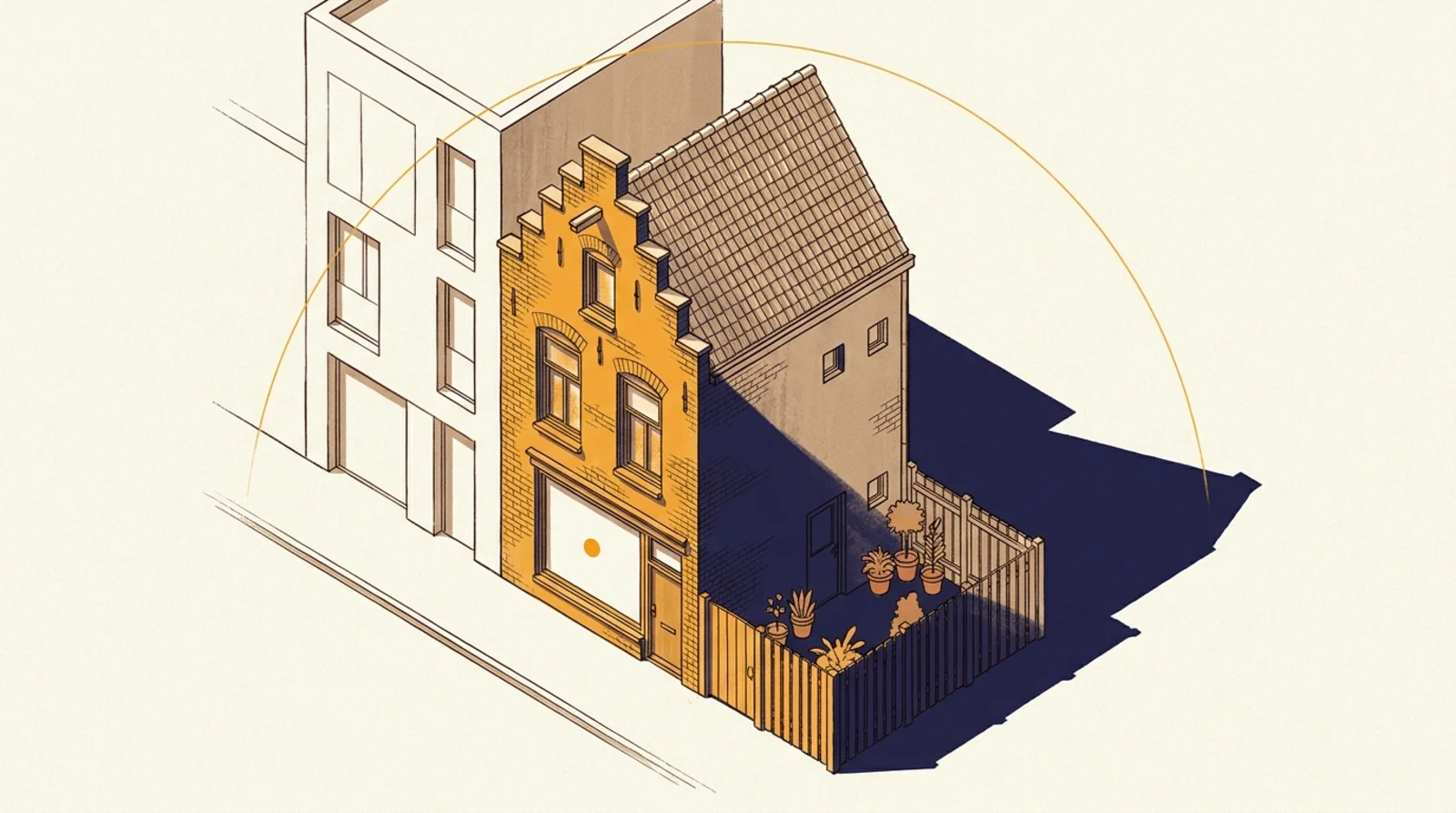
Standards & municipalities
Sunlight, daylight and neighbour law: which rules apply?
Three separate frameworks govern sunlight at a home. Sunlight access (the TNO standard) is a guideline, not a law. Daylight (Articles 4.146 and 4.147 of the Building Works Environment Decree) is the only one written into national law. Neighbour law (Article 5:37 of the Civil Code) governs unlawful nuisance. Window size counts for daylight, not for sunlight access.
Standards & municipalities
What does a sunlight study cost in 2026? A price comparison
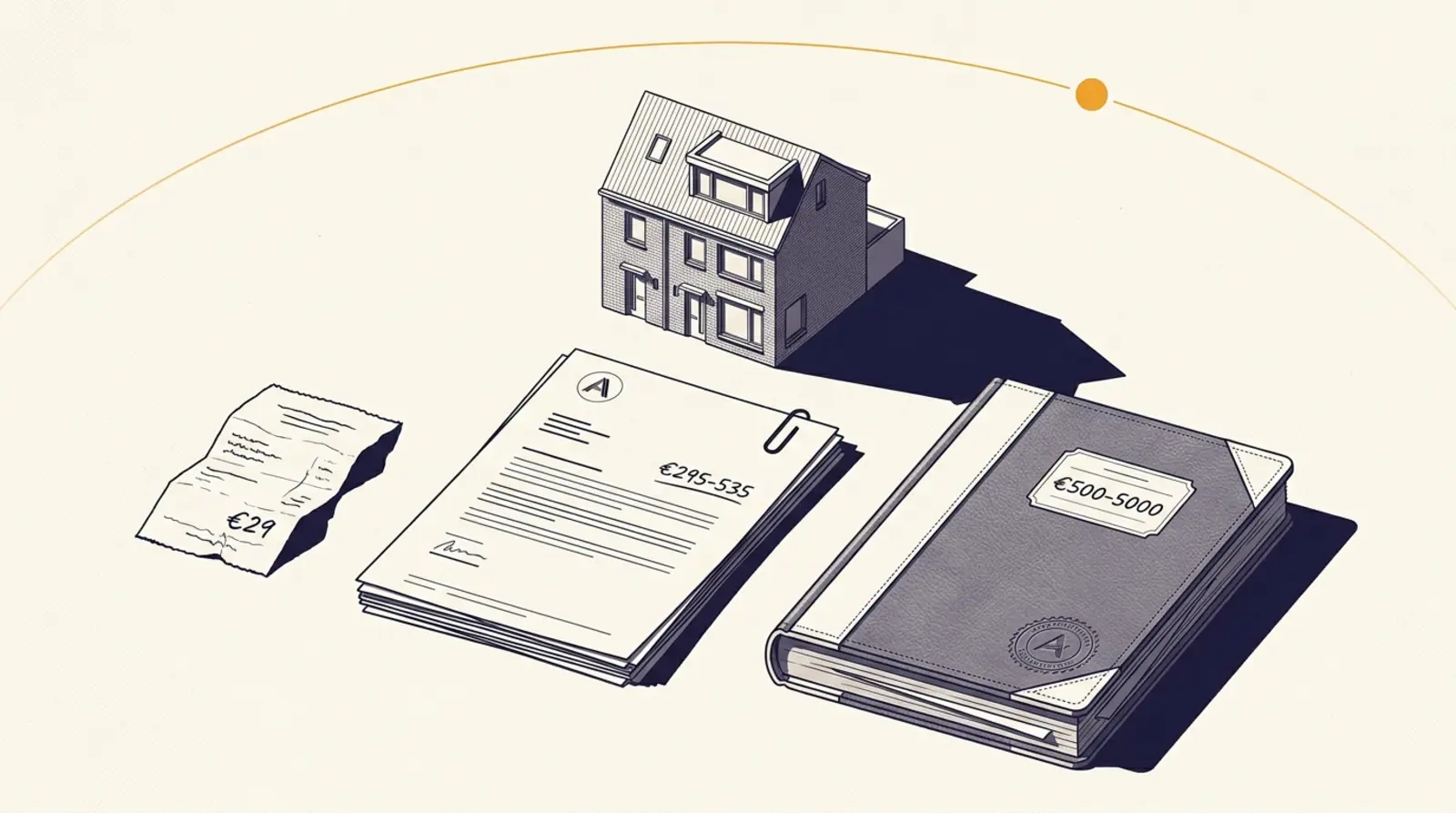
A sunlight study in the Netherlands ranges from € 29 for an automated self-service report to € 5,000 for a large engineering firm with a sworn expert. This guide sets four price tiers side by side — self-service tools, an independent building-advice consultant, a small firm and a large engineering firm — with honest trade-offs in turnaround, legal weight and iteration.
Standards & municipalities
The TNO sunlight standard explained: light and strict variants
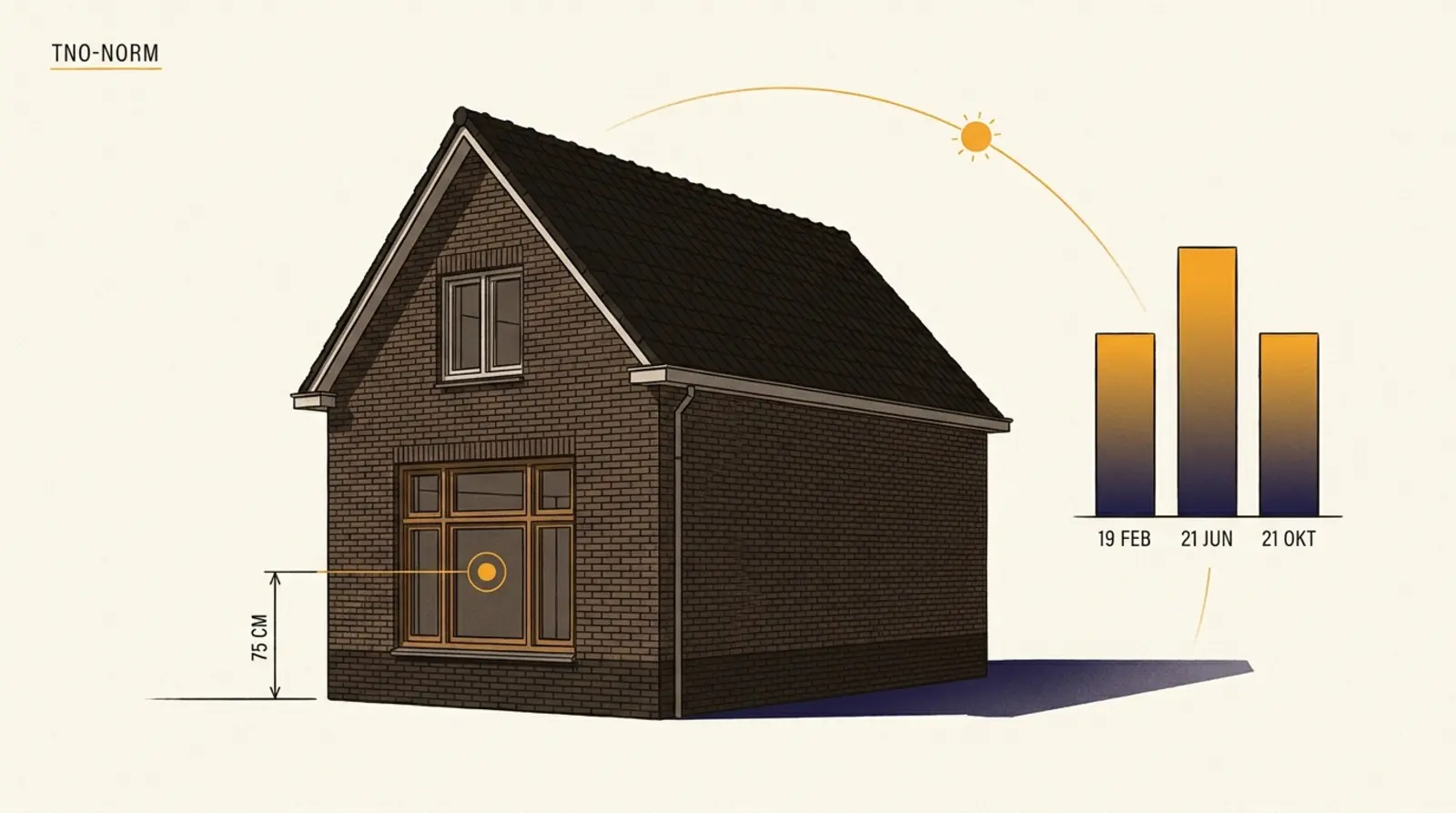
The TNO sunlight standard defines how many sun hours a home must receive on set test dates. The light standard requires 2 sun hours from 19 February to 21 October; the strict standard 3 sun hours from 21 January to 22 November. The Hague, Rotterdam, Eindhoven and Krimpen use their own variants. This is the de facto standard in Dutch permit decisions.